
How to plan a short, safe and inclusive posada, Christmas festival or end-of-year show at your daycare or preschool, with program ideas by age and a timeline for families.
As December gets closer, daycare and preschool directors and teachers across Latin America start planning the same event: the posada or Christmas festival in Mexico and Central America, the end-of-year show and "graduation" in Argentina, Chile, Peru and other countries where the school year ends in December. Families look forward to it all year, and the team usually has only a few weeks to organize it on top of the normal routine.
The good news is that a celebration with very young children doesn't need to be long or complicated to be memorable. What matters is that it fits the children's age, feels calm and safe, and includes every family. This guide walks you through planning, program ideas by age, safety and communication with families.
Start planning four to six weeks ahead
A short timeline keeps the event from taking over the last weeks of the year.
- Six weeks before: choose the date, the time and the format (in the classroom, in the patio, or in a rented space) and confirm the budget.
- Four weeks before: share a save-the-date with families, decide what each group will present and assign team roles.
- Two weeks before: confirm costumes or simple outfits, food, decorations, sound and who will take photos.
- The week of the event: do short rehearsals, send the final program and remind families of arrival and pick-up times.
Keep it short and age appropriate
Young children tire quickly, and a long event is hard for them and for their families.
- Total length: 45 to 60 minutes is usually enough, including arrival and goodbyes.
- Schedule: choose a time that respects naps and meals. Mid-morning or early evening, depending on your center's routine, works for most groups.
- Each group's turn: 3 to 5 minutes per classroom keeps attention and avoids long waits.
- Plan for tears: some children will freeze or cry on stage with so many people watching. That's normal. Let them sit with their educator or their family and never force them to perform.
Program ideas by age group
Babies and toddlers (0 to 3 years)
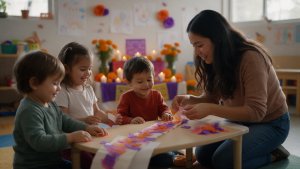
- A short song with simple movements, with the children on their educators' or families' laps.
- A "parade" of the group wearing hats, scarves or bells, walking or carried in arms.
- A photo slideshow of the year that families can watch while the little ones play.
Preschoolers (3 to 5 years)
- Two or three songs or a simple dance practiced for a few minutes a day.
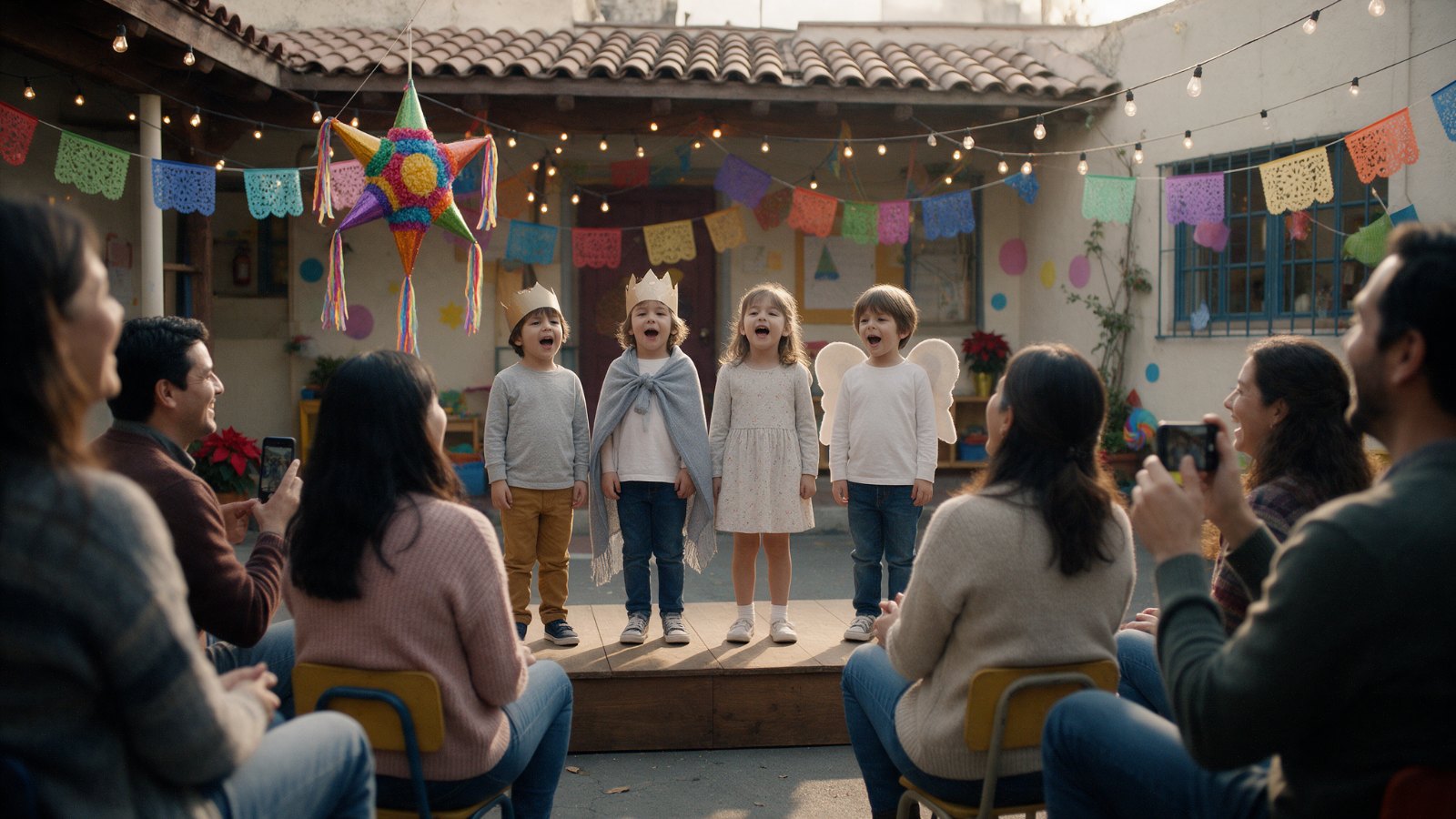
- A short pastorela or nativity scene with a narrator: the adult tells the story and the children only act or say one short line, wearing simple costumes made from fabric, paper crowns or wings.
- A poem or a group message for families, said together.
- For the end of the school year: a small "graduation" moment for the children moving on, with a certificate or a drawing for each child.
Make it inclusive
Not every family celebrates Christmas, and not every family can contribute in the same way.
- Choose a broad theme such as "end of the year", "winter" or "our year together", and let each family decide how to take part.
- Keep costs low: costumes made in class, voluntary contributions and no expensive purchases required.
- Offer alternatives for children whose families prefer that they don't take part in religious content.
- Think about families who can't attend: share photos or a short video afterwards, with the consent of every family whose child appears.
Safety, food and piñatas
- Food: check every child's allergies before deciding the menu, label dishes that families bring and prefer simple snacks to big meals.
- Candy: hard candies, peanuts and small round candies are a choking risk for children under four. For the youngest groups, fill the piñata with small toys, stickers or soft treats suitable for their age.
- Piñata: for toddlers, use a pull-string piñata instead of hitting it with a stick, and keep children behind a clear line while an adult handles it.
- Decorations: no real candles, keep cables and lights out of reach and avoid small ornaments in areas where children play.
- Pick-up: with so many people present, confirm at the end of the event that each child leaves with a family member or an authorized person.
Communicating with families
Clear messages avoid confusion and last-minute stress.
- A save-the-date with day, time and place, four weeks before.
- A short note asking which families would like to help with decorations, food or photos, three weeks before.
- A message about costumes or outfits, what to bring and any voluntary contribution, two weeks before.
- The final program, arrival time and pick-up procedure, two or three days before.
- A thank-you message with photos after the event.
Organizing it with kidsday
If your center uses kidsday, you can send each announcement to families through in-app messaging, share photos of the rehearsals and the celebration in the parent app, and check children's health information, such as allergies, and their authorized pick-up persons in their records before the event. On the day itself, check-in and check-out help your team keep track of who has arrived and who has gone home.
Final thoughts
The best end-of-year celebrations with young children are short, warm and simple. Plan a few weeks ahead, choose songs and performances that match each age, keep food and decorations safe, include every family and share the memories afterwards. Children won't remember a perfect show, but families will remember seeing them happy and comfortable in the place where they spent their year.