

Tired of hearing "nothing" at pick-up? Practical questions and simple habits that help young children share what really happened at daycare.
"How was daycare today?" "Good." "What did you do?" "Nothing." If this conversation sounds familiar, you are not alone. Most parents of young children hear some version of it every afternoon. It does not mean your child had a boring day or is hiding something. It usually means the question is simply too big.
Young children live in the present moment. By pick-up time, the morning feels very far away, and summarizing a whole day is a difficult skill they are still learning. The good news is that a few small changes in how and when you ask can turn "nothing" into real conversations.
Why young children say "nothing"
- Memory works differently at this age. Toddlers and preschoolers remember specific moments, not whole days. A broad question gives them nowhere to start.
- They are tired. A full day of play, learning, and social life is exhausting. Right after pick-up, many children just want a snack and a cuddle.
- They are still building vocabulary. Describing feelings and events in order is hard when you are three.
- The transition matters. Moving from daycare to home is a big switch, and some children need quiet time before they are ready to talk.
Ask specific, playful questions
Swap "How was your day?" for questions that point to one moment. For example:
- "Who did you sit next to at lunch?"
- "What made you laugh today?"
- "What was the hardest thing you did today?"
- "Did anyone need help today? Did you help someone?"
- "If you could do one thing from today again, what would it be?"
- "What song did you sing in circle time? Can you show me?"
- "Tell me something your teacher said today."
Silly questions also work well with preschoolers: "Did a dinosaur come to class today?" Children love correcting adults, and the correction often brings the real story with it.
Choose the right moment
The car ride home is not always the best time. Many children open up more during relaxed, side-by-side moments, such as:
- While playing together on the floor
- During bath time
- At dinner, when the whole family shares something from their day
- At bedtime, when the house is quiet and they want to stay up a little longer
Sharing your own day first also helps: "Today I had a long meeting and then I ate a really big sandwich. What did you eat?" You show them what telling a story looks like.
Use what you already know from the center
The more you know about your child's day, the better your questions become. If you know they painted with sponges, went outside to collect leaves, or had a new song in music time, you can ask about that directly: "I heard you collected leaves today! What colors did you find?"
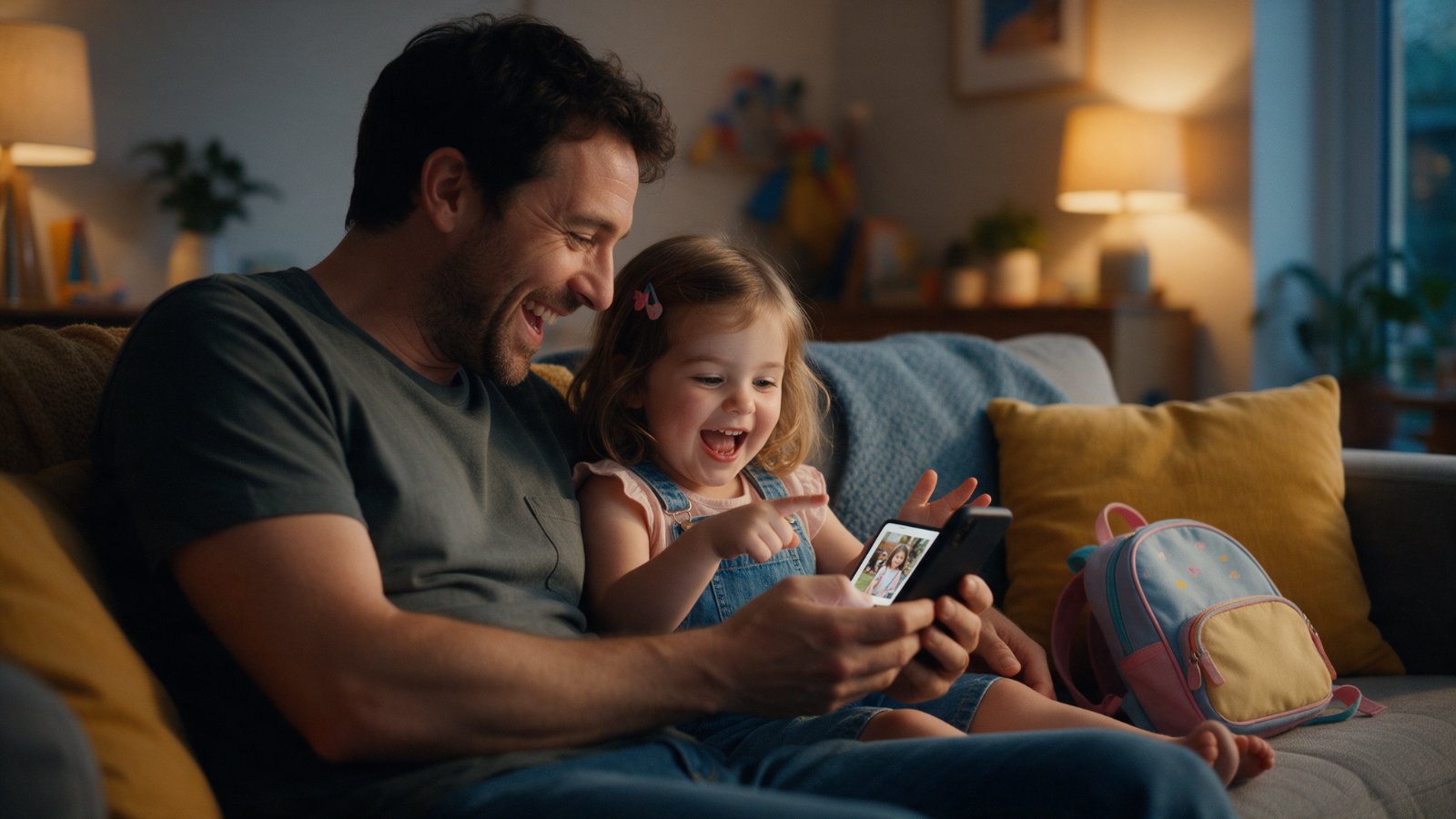
This is where daily updates from daycare make a big difference. With the kidsday parent app, families can see photos, activities, meals, naps, and notes from educators throughout the day. Looking at the photos together in the evening is one of the easiest ways to help a child remember and talk about their day. Pointing at a picture and asking "What were you building here?" often unlocks a whole story.
Listen more than you ask
When your child does start talking, try not to fire more questions straight away. Repeat what they said, show interest, and give them time. "You played with the blocks? Tell me more." Avoid correcting details or turning it into a test. Children talk more when they feel their stories are enjoyed, not checked.
Pay attention to feelings, not only events
Sometimes the most important information is emotional. Questions like "Was there a moment today when you felt sad?" or "What made you feel proud?" help children name their feelings and tell you if something is bothering them. If your child mentions a worry repeatedly, share it with their educator. Most concerns are easy to solve when parents and teachers work together.
Final thoughts
"Nothing" rarely means nothing. With specific questions, the right timing, and a little help from the photos and updates your center shares, you will hear much more about the friends, games, and discoveries that fill your child's day, and your child will build language and confidence along the way.