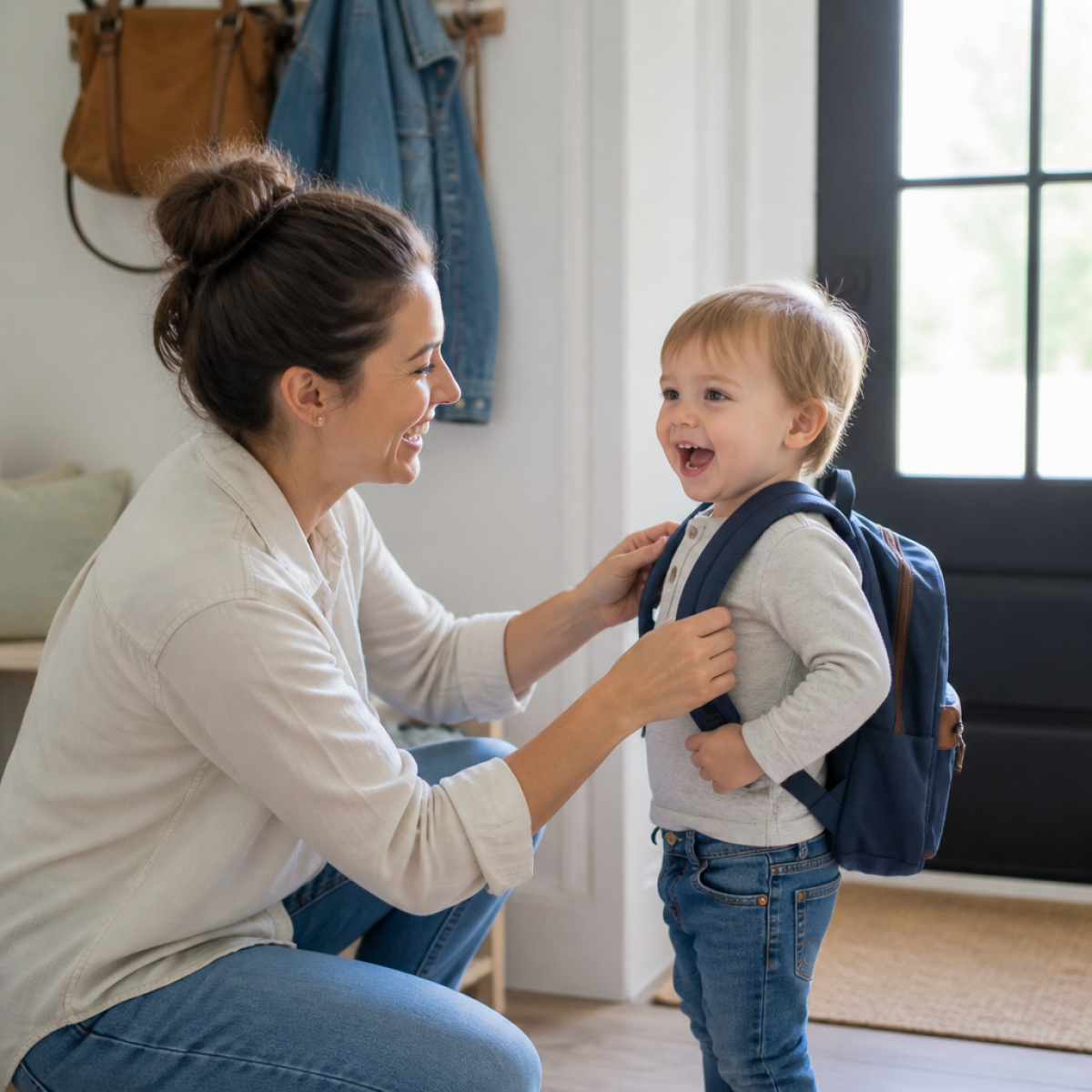
Starting preschool for the first time is one of the biggest milestones, not just for the child, but for the entire family. The question that worries almost every parent is: When should we start preparing so that this transition is as smooth and tear-free as possible?
The short answer is: much earlier than you think. Preparation doesn't happen over a weekend; it is a gradual process that takes time and patience.
Below is a practical, step-by-step timeline and guide on how to plan this important phase.
The Preparation Timeline: When and What to Do
Physical preparation (routines and packing) is only half the battle. The other—and often hardest—half is emotional.
1. Separation Anxiety (For both child and parent)
It is completely normal for your child to cry during the first few days. Remember that you, as a parent, will also feel anxious. Children read our emotions like a scanner; if you show hesitation, sadness, or anxiety at the classroom door, your child will sense it and assume preschool is an unsafe place.
Pro-Tip: Keep goodbyes at the door short, warm, and confident. Give a big hug, a kiss, and say: "Mommy/Daddy will be back to pick you up as soon as you finish your afternoon nap." Never sneak away while they are distracted, as this can damage their trust.
.png)
2. Socializing with Other Children
If your child has spent most of their time at home or has not had much contact with peers, starting preschool can feel like a bit of a culture shock.
Pro-Tip: During the final month before school starts, organize more playdates at the park with other children. This helps them get used to the concepts of sharing toys and waiting for their turn.
Signs Your Child is Ready
While the most common age to start preschool is between 2.5 and 3 years old, readiness is highly individual. Your child is likely ready if they can:
-
Stay for a few hours without your direct presence (e.g., with grandparents or a babysitter).
-
Express basic needs (water, food, bathroom) through simple words or clear gestures.
-
Show interest in playing with other children and display curiosity about new environments.
Early and calm preparation is the key to turning the start of preschool from a stressful transition into a beautiful, unforgettable adventure!

Articole similare
Thursday, 08 May 2025
Învață copiii să aibă grijă de jucăriile lor: o responsabilitate care începe devreme!
Sunday, 10 December 2023
Kăshilla pentru Încurajarea Socializării la Copii în Creșă!
Wednesday, 23 July 2025
Managing Comportamente Dificile la Copii: Un Ghid Profesional pentru Educatorii Tinerilor!
Wednesday, 27 August 2025
Înapoi la școală: Un ghid pentru un început fără probleme!

Thursday, 04 January 2024