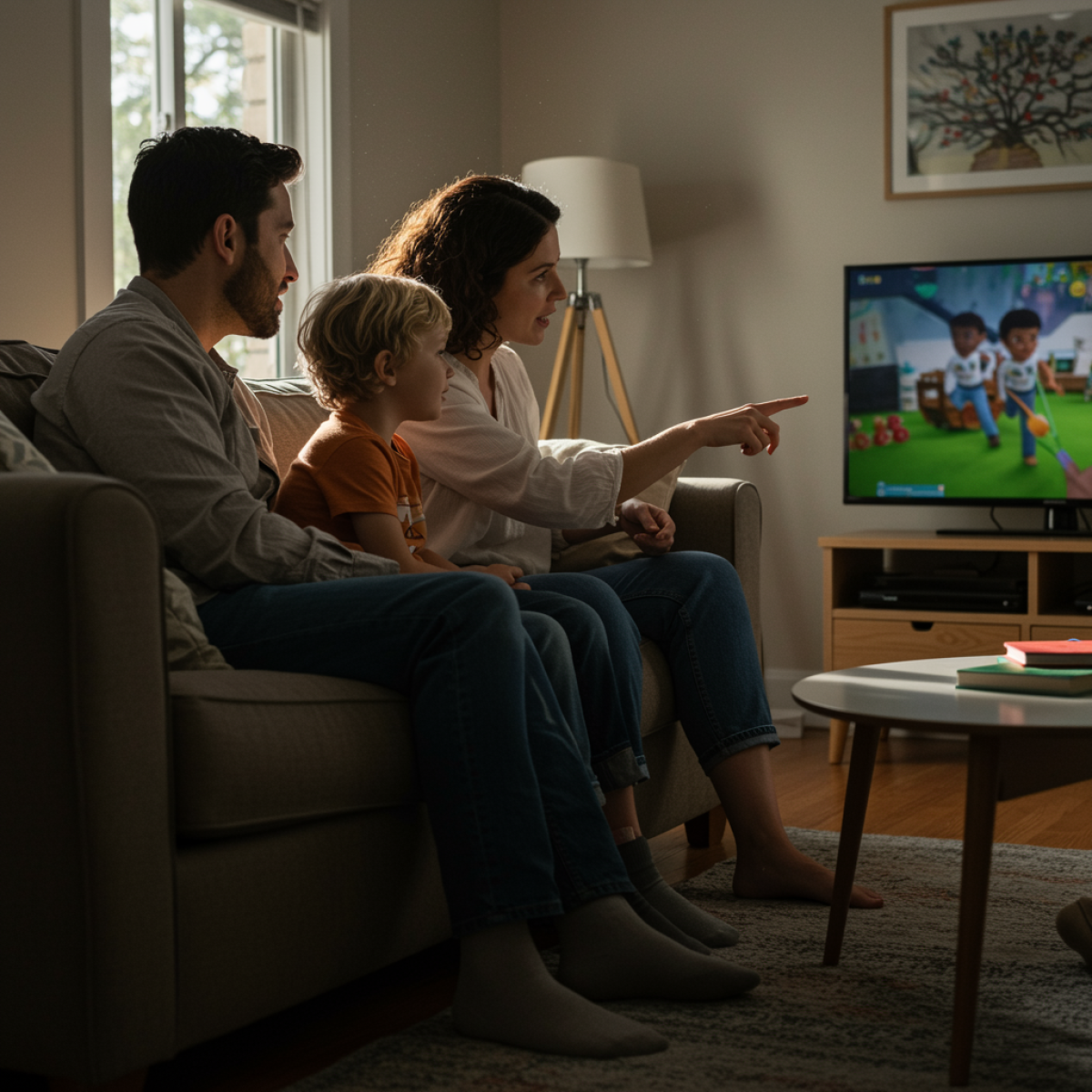
We all grapple with "screen time." How much is too much? Is it helping or hurting? These questions keep many of us up at night. For years, the message has been about strict limits, but groundbreaking research released in January 2026 is offering a much more nuanced and exciting perspective.
The big takeaway? It’s less about the minutes on the clock and more about how your child engages with digital content.
The Game Changer: "Interactive Co-Viewing"
A major meta-analysis involving over 15,000 children, published in JAMA Pediatrics, highlights a massive difference between passive screen time and interactive co-viewing. This happens when digital tools or caregivers actively prompt interaction. Think of it less like a silent movie and more like a shared storytime, but on a tablet.
The finding? Interactive co-viewing shows significantly higher cognitive gains compared to passive viewing. In fact, passive viewing (like watching cartoons alone) has been linked to a 6x higher likelihood of lower communication scores in toddlers.
What Does "Interactive Co-Viewing" Look Like?
It’s more than just sitting next to your child. Based on the latest 2026 American Academy of Pediatrics (AAP) guidelines, quality digital engagement involves:
- Labeling & Describing: Point to the screen and say, "Look, the big red truck is driving fast!"
- Scaffolding: Ask open-ended questions. "Where did the blue bird go?"
- Bridge-Building: Connect the screen to real life. "That dog barks just like our neighbor’s dog!"
- Social Contingency: Choosing apps where a child’s voice or touch triggers a response, mimicking the "back-and-forth" of human conversation.
The "Technoference" Warning
While the research is positive about shared use, it also carries a warning. A 2025 study from the University of Wollongong found that "technoference" when parents use their own devices while around their children can disrupt the "natural flow" of interaction critical for a child’s language acquisition and emotional bonding.
Our Takeaway at kidsday
Let’s shift our focus from merely limiting minutes to maximizing quality. Rather than using a tablet as a "digital pacifier," we can treat it like a picture book a conversation starter between you and your little learner.
As Dr. Jenny Radesky, chair of the AAP Council on Communications and Media, recently noted: "Screen time doesn’t occur in a vacuum. Joint media consumption is associated with greater learning and shared bonding."
Sources & References
- American Academy of Pediatrics (2026): New Screen Time Guidelines & Paradigm Shift in Developmentally-Aligned Design. [TechPolicy.Press Report, Jan 2026].
- JAMA Pediatrics (May 2025): Parental Technology Use in a Child’s Presence and Health and Development in the Early Years: A Systematic Review and Meta-Analysis. (Study of 14,900 participants across 10 countries).
- Journal of Medical Internet Research (JMIR) (2025): Association of Screen Content With Early Development Among Preschoolers: A 7-Day Monitoring Study.
- OECD (2025): How’s Life for Children in the Digital Age? [OECD Publishing, Paris].
- Frontiers in Psychology (2025): The Impact of Touchscreen Digital Exposure on Children’s Social Development and Communication.
Поврзани Постови
Wednesday, 29 April 2026
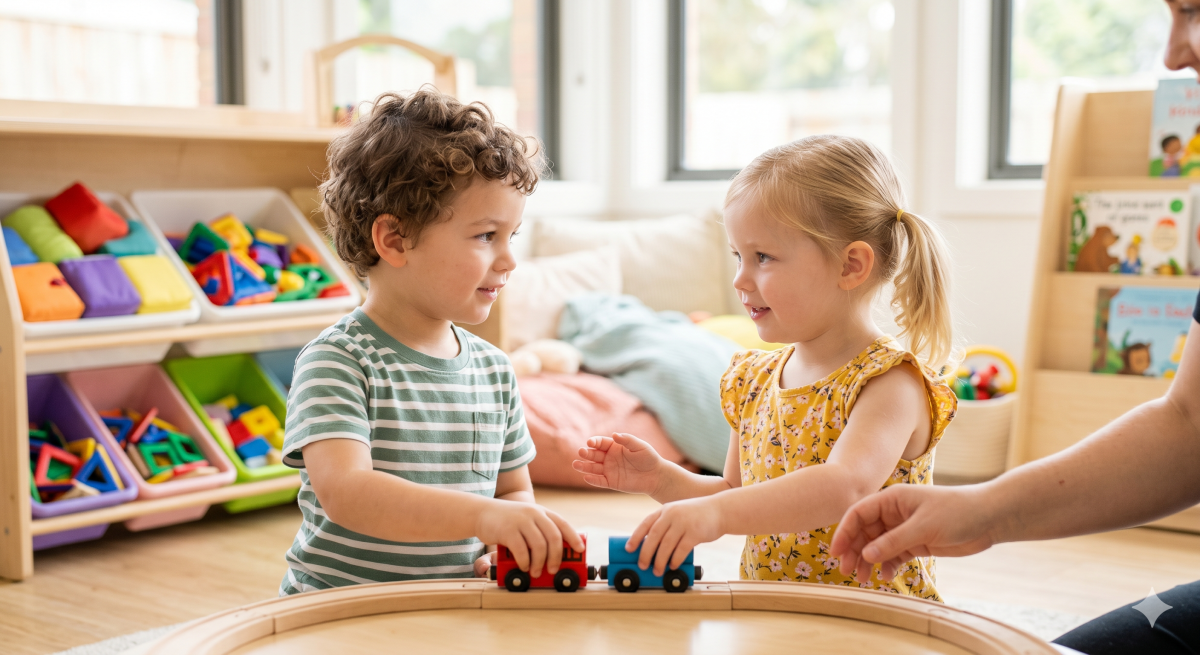
How to teach children to share toys, apologize, and cooperate...

Wednesday, 08 November 2023
Splash into Fun: Outdoor Activities for Rainy Days!
Friday, 13 March 2026
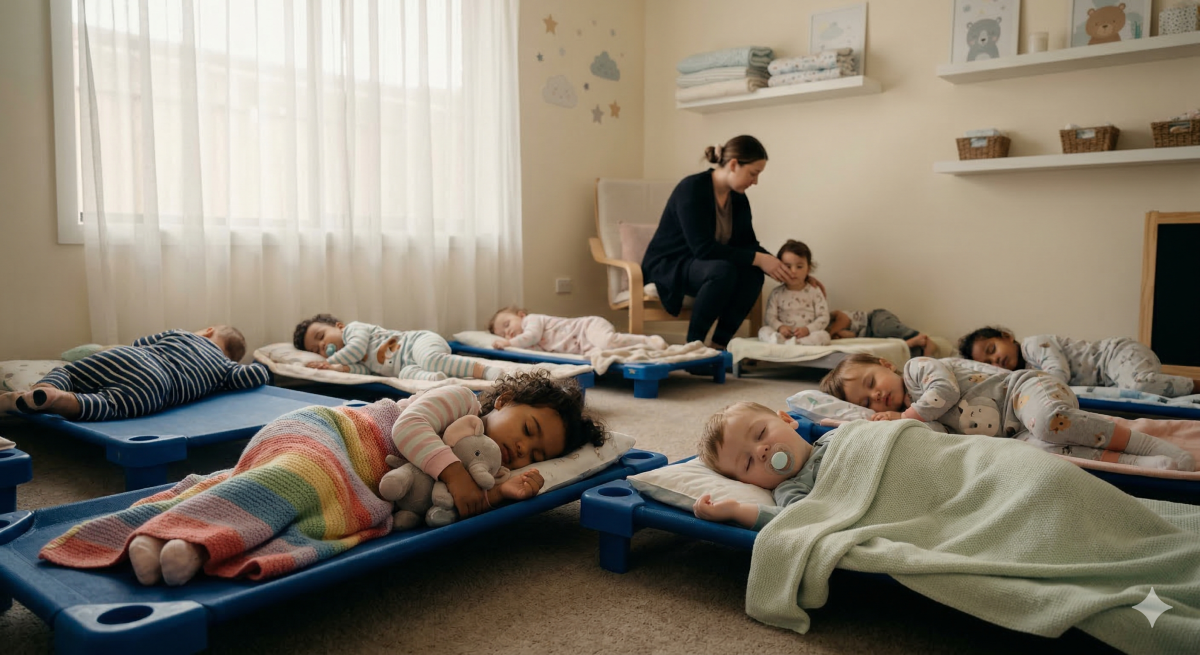
Sleep: The Secret Superpower of Childhood – Celebrating World Sleep Day

Tuesday, 27 May 2025
Why Summer Camps Matter in Daycare and Preschool – 5 Inspiring Weekly Themes!
Tuesday, 15 April 2025