
Is your 2-year-old not talking yet? Learn what is typical, which red flags matter and simple everyday ways to encourage speech at home and daycare.
Maybe your friend's toddler is already chatting in little sentences, while your own two-year-old still points, babbles and uses a handful of words. Or maybe a relative has started asking, "Is he talking yet?" It is completely natural to wonder whether everything is on track, and to feel a knot of worry every time the question comes up.
The good news is that language develops at very different speeds from child to child, and many late talkers catch up on their own. At the same time, it is worth knowing which signs suggest a closer look is needed, because early support can make a real difference. This guide explains what is typical around age two, which red flags matter, and what parents and educators can do every day to help.
Every child talks on their own timeline
There is a wide range of normal when it comes to speech. Some children say their first words before their first birthday, while others take noticeably longer and then seem to make a big leap. Many factors play a role, including temperament, birth order, how much one-to-one conversation a child hears and whether they are growing up with more than one language.
Children learning two or more languages may mix words or seem to have fewer words in each language at first. This is a normal part of bilingual development, not a cause of delay. What matters is their overall communication across all their languages.
What is commonly expected around age two
Milestones are general guidance, not hard rules. Around their second birthday, many children:
- Have a growing vocabulary and learn new words regularly, even if pronunciation is still unclear.
- Start to combine two words, such as "more milk", "daddy go" or "big ball".
- Understand simple instructions, like "get your shoes" or "give me the cup", without needing gestures.
- Point to familiar objects or pictures when you name them, and point to show you things they find interesting.
- Use gestures and sounds to communicate, such as waving, shaking their head or pulling you towards what they want.
- Imitate words and actions they hear and see from adults and other children.
Understanding usually develops ahead of speaking. A child who follows instructions, enjoys books and communicates clearly with gestures is showing important building blocks for language, even if spoken words are still few.
Red flags that deserve a closer look
Some signs are worth discussing with a pediatrician sooner rather than later:
- Not understanding simple words or familiar instructions in everyday situations.
- Few or no gestures, such as not pointing, waving or showing objects to share interest.
- Loss of words or skills they used to have. Any regression at any age should always be checked.
- Very little interest in interacting, limited eye contact or not responding to their name.
- Not imitating sounds or words and rarely trying to communicate with others.
- Frequent ear infections or signs they may not be hearing well, such as not reacting to sounds.
Seeing one of these signs does not mean something is wrong. It simply means a professional opinion is the best next step.
Why a hearing check comes first
Children learn to talk by listening. Even mild or temporary hearing problems, for example from fluid in the ears after colds, can make it harder to pick up words. That is why a hearing check is usually one of the first things recommended when speech seems slow. It is simple, painless and can rule out or identify an important cause early.
Everyday ways to encourage language at home
You do not need special equipment or flashcards. Small, natural moments throughout the day are the most powerful:
- Narrate your day. Describe what you are doing: "I'm cutting the apple. Crunch, crunch!"
- Follow their lead. Talk about what your child is looking at or playing with, rather than changing the subject.
- Add one word. If your child says "car", you can say "red car" or "car goes fast".
- Give time to respond. Pause and wait a few seconds after a question. Many children need a moment to find their words.
- Offer choices. "Do you want the banana or the apple?" invites a word instead of a nod.
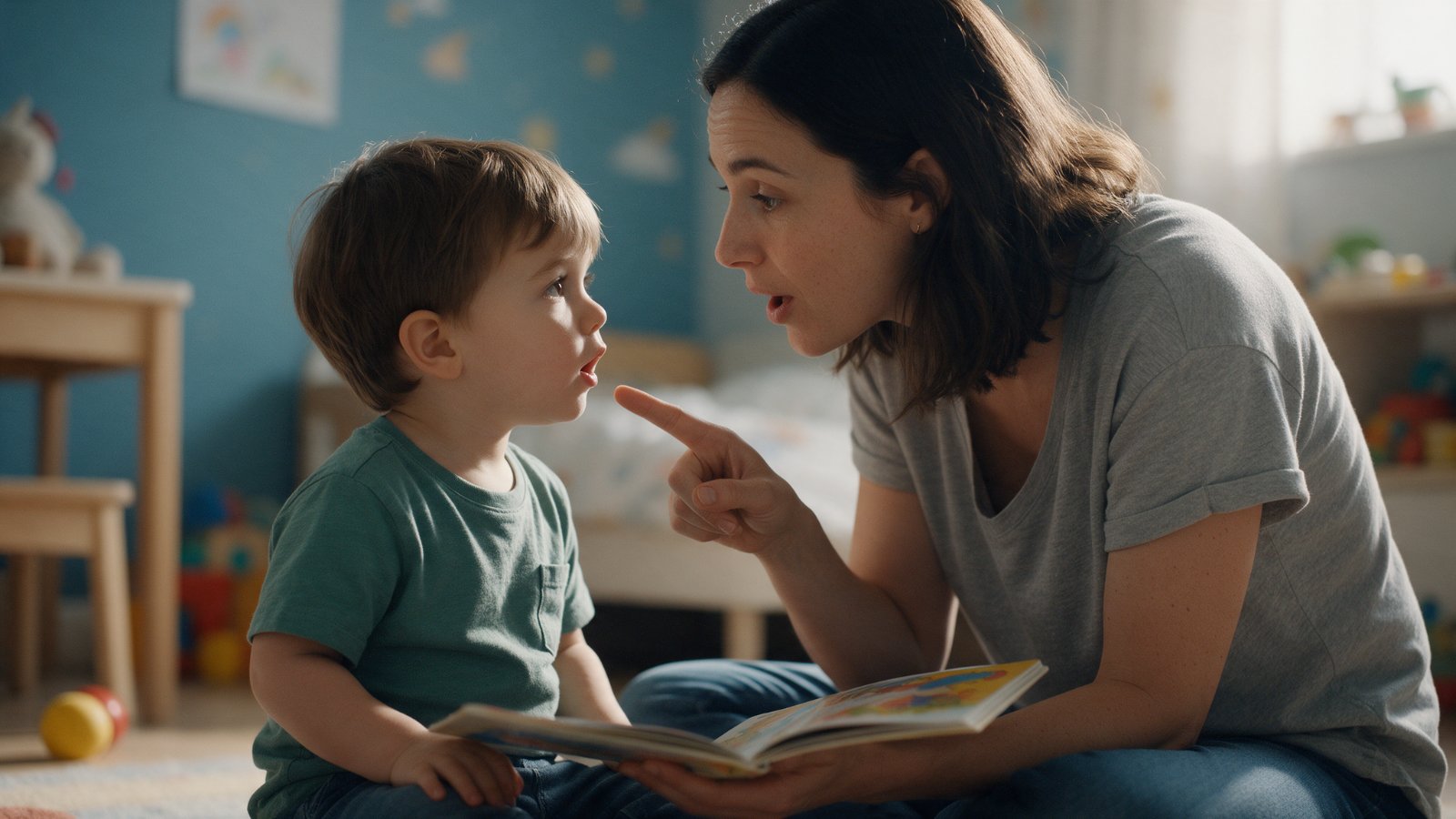
- Read together every day. Name pictures, make animal sounds and let your child turn the pages.
- Sing songs and rhymes with actions. Repetition and rhythm make words easier to remember.
- Limit background screens. Real back-and-forth conversation with people helps language more than passive watching.
- Avoid pressure. Instead of "say ball", model the word warmly and celebrate any attempt to communicate.
How daycare and nursery can support speech
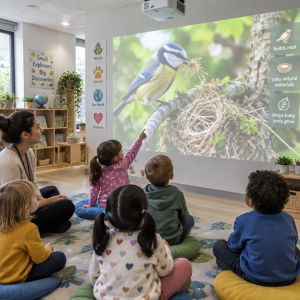
A good daycare or nursery offers a rich language environment. Children hear songs, stories and conversations throughout the day, and they are motivated to communicate with friends during play. Many late talkers gain confidence simply by being around other children who are talking.
Educators can help in several ways:
- Using the same simple strategies as at home, such as narrating, expanding words and giving time to respond.
- Planning small-group activities with books, puppets and songs that invite children to join in.
- Observing communication over time, including how a child understands, gestures and plays with others.
- Sharing observations with parents calmly and regularly, so families have a fuller picture of how their child communicates outside the home.
When parents and educators compare notes, it becomes easier to spot real progress or to notice when extra support might help.
When to see a pediatrician or speech-language therapist
If you have concerns, trust your instinct and speak to your pediatrician. It is always better to ask early than to wait and wonder. Your doctor may recommend a hearing test and, if needed, refer you to a speech-language therapist, who can assess your child's understanding, speech and play and suggest activities tailored to them.
Seeking an assessment does not label your child. Many families find it reassuring, and if support is needed, starting early gives children the best chance to build their skills with confidence.
Staying connected with your child's day
When you are paying close attention to your child's language, it helps to know what is happening at daycare too. With kidsday, educators can send daily updates through the parent app, including photos, activities and notes, and message parents directly. This makes it easier to hear about a new word, a favorite song or a moment of progress, and to keep the conversation going at home.
Final thoughts
A two-year-old who is not talking much yet is not necessarily behind, and many children surprise their families with sudden progress. Keep talking, reading and playing together, and watch for how your child understands and connects with you, not just how many words they say. If something feels off, reach out to your pediatrician early. With patience, warmth and the right support, your child will find their voice.