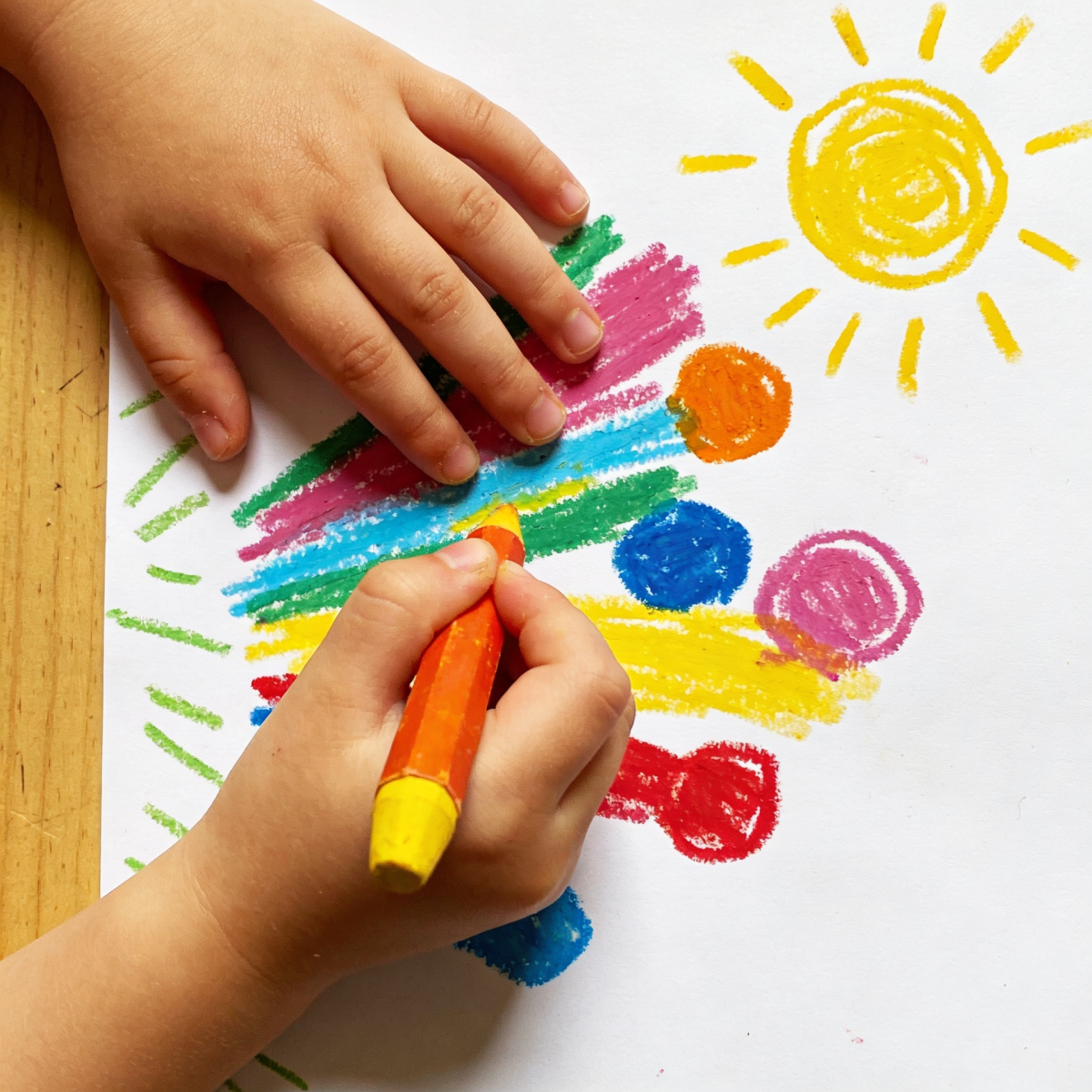
For a young child, a pencil and paper are not just playthings; they are bridges of communication. Before mastering syntax or complex vocabulary, children use visual symbolism to tell their stories, express their fears, and share their joys.
-
Scribbling as Visual "Babbling": Just as infants make sounds before speaking, early scribbles (around 18 months to 2 years) are the first steps of communication. At this stage, the child isn't drawing an object, but expressing movement and energy.
-
Colors as Pure Emotions: When emotional vocabulary is limited, colors become their expressive tools. Bright colors like red and yellow often reflect high energy or excitement, while darker tones may suggest a more reflective state or a need for protection.
-
The Symbolism of Space: In a child's world, size on paper corresponds to emotional importance, not physical reality. A child might draw themselves very small next to a giant parental figure to show a sense of protection or dominance.
-
Drawing as Catharsis: Children often draw events that have scared them. By putting the fear on paper, the child gains control over it. The paper becomes a safe environment to "confront" the big world.
Adults should view a child's drawing not as an art piece to be judged aesthetically, but as a window into their mind. Instead of asking "What is this?", a more supportive approach is to say: "Tell me about what you’ve drawn." This invites them to use the few words they have to complete the story they began on paper.
Note: This process is known as "visual literacy" and is essential for the later development of writing and reading skills.
Related Posts

Friday, 23 August 2024
Kidsday launches Parents App on Play Store and App Store!

Monday, 14 April 2025
Building Trust with New Parents: 10 Essential Steps for Childcare Providers!
Friday, 08 November 2024
Creating Family-Friendly Events at Daycare: Strengthening Connections Between Families and Educators!

Tuesday, 25 January 2022
How to Digitize Your Kindergarten or Daycare Without Stress!
Tuesday, 15 April 2025