
How the kidsday AI Development Report turns educators' observations into status, monthly, and semester reports with progress, focus areas, and suggested activities.
Ask any early childhood educator what takes up their evenings and weekends, and development reports will be near the top of the list. Educators observe children carefully every day: how they play, speak, move, solve problems, and get along with others. Turning dozens of those observations into a clear, useful report for each child, though, can take hours that most teams simply do not have.
That gap between rich daily observation and time-consuming reporting is exactly what the AI Development Report in kidsday is designed to close.
Why development reports matter
A good development report does much more than fill a file. It helps educators plan activities that match each child's needs, gives directors a picture of progress across groups, and gives parents a clear, honest view of how their child is growing. Regular reports also make it easier to notice early when a child may need extra support in a particular area.
The challenge is consistency. When reports are written by hand, their quality often depends on how much time an educator had that week, and important observations can get lost in notebooks and memory.
It starts with the educator's observations
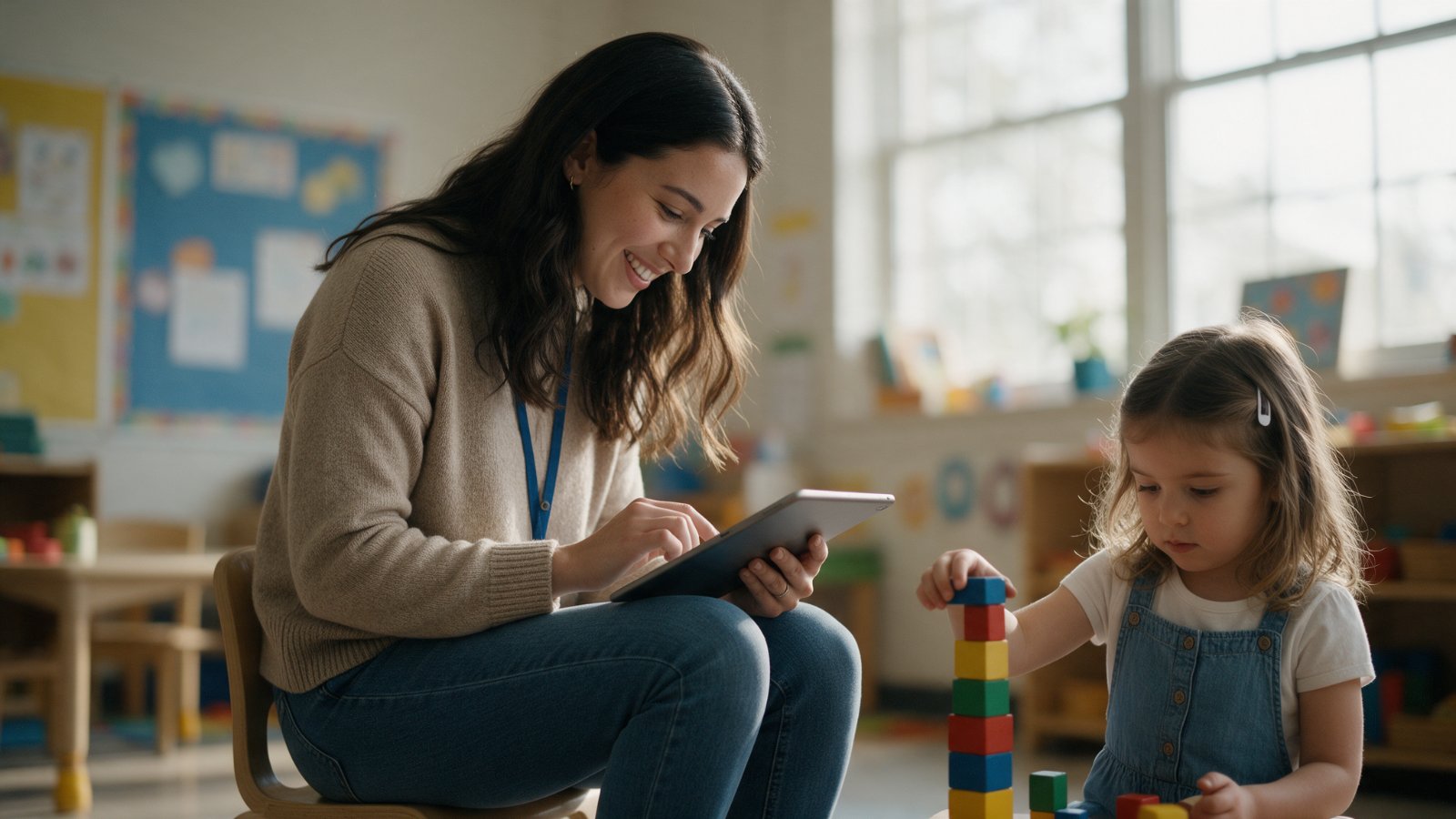
The AI Development Report does not replace the educator's professional judgment. It builds on it. Throughout the month or semester, educators record observations of each child in kidsday as they happen: a child who counted to ten for the first time, who comforted a friend, who is still finding it hard to hold a pencil, or who joined a group game for the first time.
These observations are the foundation. The better and more regular they are, the more meaningful the report becomes.
From observations to a clear report
Once observations are recorded, kidsday uses AI to bring them together into a structured report. Educators can generate:
- A current status report showing where the child is right now
- A monthly report to follow progress over shorter periods
- A semester report for a broader view of the child's development
Each report shows how the child is growing, highlights areas where they may be lagging behind, and suggests activities that can help them improve in those areas.
What this means for educators
- Hours saved: instead of writing every report from scratch, educators review and refine a draft built from their own observations.
- More consistent reports: every child's report follows the same clear structure, regardless of how busy the week was.
- Ideas ready to use: suggested activities give educators a practical starting point for planning support in the classroom.
- Less lost information: observations are stored in one place, so nothing important is forgotten when it is time to report.
What this means for directors
For directors, consistent reports across all groups make it easier to see how children are progressing, where educators may need support, and how the quality of observation and planning compares across classrooms. Well-structured reports also show families and inspectors that development is being followed carefully and professionally.
What this means for parents
Parents want to understand how their child is really doing, not just hear that "everything is fine." A clear report that describes progress, names the areas that need more attention, and suggests activities gives families something concrete to discuss with educators and to support at home.
Tips for getting the most out of AI reports
- Observe little and often. Short, regular observations across different areas of development produce better reports than a few long notes.
- Be specific. "Built a tower of eight blocks and counted them aloud" is more useful than "good at maths."
- Always review before sharing. The educator knows the child best. Read the report, adjust anything that does not match your experience, and add your own professional insight.
- Use the suggested activities. Plan them into the following weeks and record observations to see how the child responds.
Final thoughts
Great early education depends on educators who know each child well. The AI Development Report in kidsday helps them turn that knowledge into clear, consistent reports in a fraction of the time, so they can spend less time writing and more time with the children.