

Is your 2-year-old hitting? Learn why toddlers hit, how to respond calmly, what to teach instead, and how home and daycare can work together.
Few things are as upsetting for a parent as watching your sweet two-year-old hit another child, or hearing from daycare that there has been "another incident." Many parents worry that it means something is wrong, or that their child will be labeled as aggressive. Educators, too, can feel stretched when one toddler keeps lashing out in a busy group.
Hitting, pushing and grabbing are very common at this age. They are usually a sign of big feelings and still-developing skills, not bad character. The encouraging part is that, with calm and consistent support from the adults at home and at daycare or nursery, most toddlers learn better ways to cope. This guide explains why it happens and what you can do.
Why Two-Year-Olds Hit
Toddlers rarely hit to be cruel. More often, hitting is the quickest tool they have when something feels overwhelming. Common reasons include:
- Limited language. Toddlers often understand far more than they can say. When they cannot find the words for "That's mine" or "I'm upset," their hands do the talking.
- Frustration. Wanting to do things independently but not yet being able to can be very frustrating.
- Still-developing impulse control. The ability to stop and think before acting takes years to mature. At two, feelings often turn into actions instantly.
- Imitation. Toddlers copy what they see, from other children, siblings, adults or screens.
- Overstimulation and tiredness. Noise, crowds, hunger or a missed nap can push a toddler past their limit.
- Testing cause and effect. Some toddlers hit simply to see what happens, especially if it gets a big reaction.
- Changes and stress. A new sibling, starting daycare or other changes can show up as more hitting for a while.
Biting can appear for many of the same reasons, but hitting is often more about frustration and communication in the moment.
What to Do in the Moment
Your response in the seconds after a hit matters more than any lecture later. Aim to be calm, quick and clear.
- Stay calm. A big emotional reaction can frighten your child or, for some toddlers, make hitting more interesting.
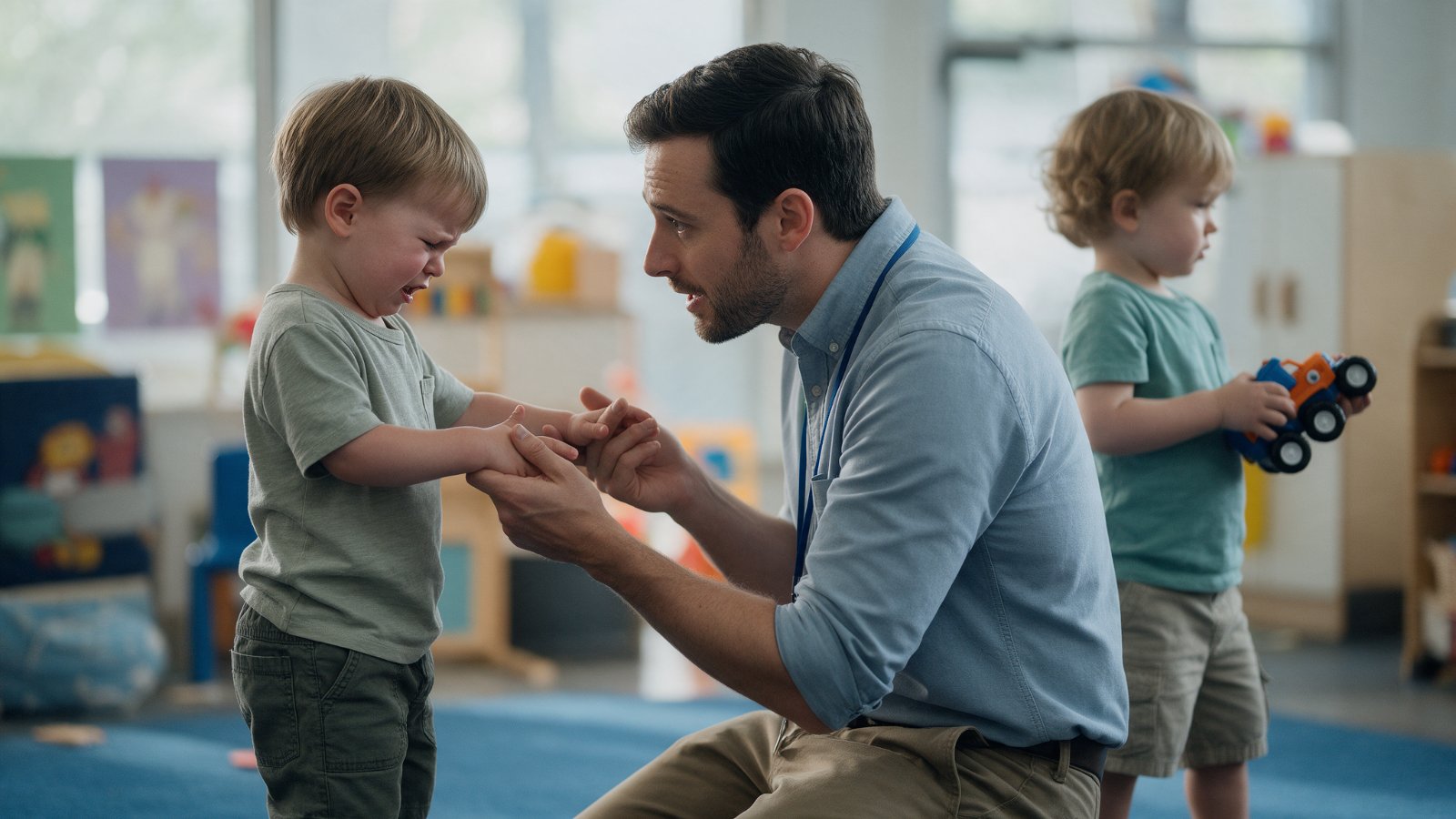
- Stop the behavior gently and firmly. Hold their hand or move them away, and say simply: "I won't let you hit."
- Check on the other child. Comforting the child who was hurt shows empathy and keeps attention away from the hitting.
- Name the feeling. "You're angry because he took the truck." This helps your toddler connect feelings with words.
- Keep words short. Two-year-olds cannot follow long explanations when upset.
- Give a short break if needed. Moving to a quieter spot with an adult can help everyone calm down.
- Never hit back. Physical punishment teaches that hitting is a way to solve problems.
Teach What to Do Instead
Telling a toddler what not to do is only half the job. They also need to learn what they can do when feelings are big.
- Give simple words to use: "Stop," "Mine," "My turn," "Help."
- Show gentle touch. Practise "gentle hands" with stroking, high fives or hugs.
- Offer safe outlets for strong feelings, such as stamping feet, squeezing a soft toy, or pushing against a wall.
- Teach asking for help. Encourage your child to come to an adult when there is a problem.
- Practise when calm. Role-play with toys, read books about feelings, and talk through simple scenarios.
- Notice and praise good moments. "You used your words when you wanted the ball. Well done."
Prevention: Reducing the Triggers
Many hitting incidents can be avoided by spotting what leads up to them.
- Keep routines predictable, with regular meals, snacks and rest
- Watch for signs of tiredness, hunger or overstimulation and step in early
- Provide enough popular toys to reduce conflict, and help with turn-taking
- Give warnings before transitions, such as tidy-up time or leaving the park
- Stay close during play with other children while your toddler is learning
- Offer plenty of active play so energy has a positive outlet
- Limit exposure to aggressive content on screens
Consistency Between Home and Daycare
Toddlers learn fastest when the adults around them respond in the same way. If hitting is happening at home, at daycare or nursery, or both, working together makes a real difference.
- Agree on simple shared words, such as "gentle hands" or "I won't let you hit."
- Share what seems to trigger the hitting and what helps your child calm down.
- Keep communication open and non-judgmental. Educators and parents are on the same team.
- Avoid punishing at home for something that happened at daycare. The moment has passed, and toddlers will not connect the two.
Documenting Patterns
Keeping simple notes helps adults see what is really going on. For each incident, it can be useful to record:
- The time of day and what was happening just before
- Who was involved and where it happened
- How the child seemed to feel, for example tired, hungry or frustrated
- How the adults responded and what helped
Over a few weeks, patterns often appear, such as hitting before lunch or during busy free play, which makes prevention much easier.
When to Seek Extra Support
Most toddlers hit less as their language and self-control grow. It is worth talking to your pediatrician or a child development specialist if:
- Hitting is very frequent, intense or getting worse over time despite consistent support
- Your child often hurts themselves or others seriously
- You notice concerns with speech, understanding or play
- Aggression continues well beyond the toddler years
- You simply feel worried or unsure how to help
Asking for support is a positive step, not a sign of failure.
Keeping Parents and Educators Connected
Clear, timely communication helps everyone respond calmly and consistently. In centers that use kidsday, educators can log incidents as they happen and share updates and notes with parents through the kidsday app, and parents can message educators directly. Over time, these records make it easier to spot patterns, track progress, and agree on next steps together.
Final Thoughts
Toddler hitting is a normal, if challenging, stage of growing up. With calm responses, clear limits, plenty of teaching and good teamwork between home and daycare, most children learn gentler ways to handle big feelings. Be patient, notice the small improvements, and remember that your child is still learning.