

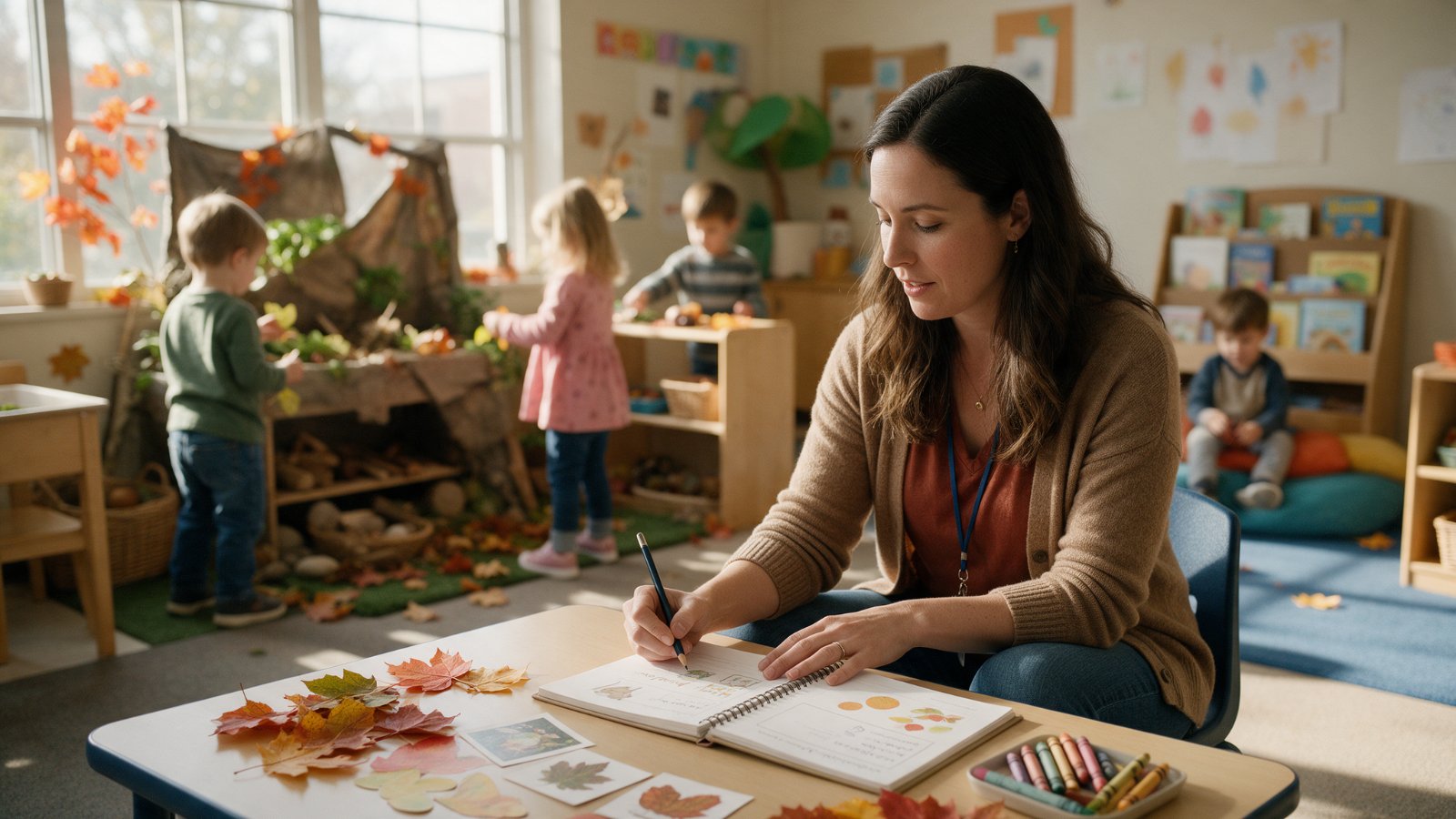
What a strong preschool curriculum covers, how 3- and 4-year-olds differ, and how to plan themes and balanced weekly activities for the whole year.
Three- and four-year-olds are curious, energetic, and ready to learn in remarkable ways. A good preschool curriculum turns that curiosity into steady progress across every area of development, without turning the classroom into a miniature school. Whether you lead a preschool group or plan the program for a whole center, this guide shows how to build a year of learning that is structured, playful, and easy to follow.
What a strong preschool curriculum covers
Children at this age develop across several connected areas. A balanced curriculum plans for all of them every week:
- Language and early literacy: conversations, stories, songs, rhymes, recognizing their name, letter sounds, and early mark-making
- Early math: counting, comparing quantities, shapes, patterns, sorting, and measuring through play
- Social and emotional development: naming feelings, taking turns, solving conflicts, and building friendships
- Physical development: running, climbing, balancing, plus fine motor skills like cutting, threading, and holding a pencil
- Understanding the world: nature, seasons, community, simple science experiments, and cultures
- Creative expression: art, music, movement, role play, and building
How 3-year-olds and 4-year-olds differ
Three-year-olds learn best through short, hands-on activities, lots of repetition, and plenty of free play. Their attention spans are short, so group times should be brief and active.
Four-year-olds can manage longer projects, follow multi-step instructions, and enjoy challenges such as simple games with rules, early writing, and counting beyond ten. This is the year to gently build the independence and skills that support a smooth transition to school.
Plan the year in themes
Themes give learning a thread that children can follow and get excited about. Choose themes that connect to children's lives and the seasons, for example:
- Autumn: all about me, my family, autumn changes, harvest and food
- Winter: weather and seasons, animals in winter, light and dark, celebrations around the world
- Spring: growing plants, insects and small creatures, community helpers, transport
- Summer: water and sand, the ocean, outdoor exploration, getting ready for the next group or school
Each theme typically lasts two to four weeks. Plan activities in every developmental area around the theme, and stay flexible if children show a strong interest in something unexpected.
Build a balanced weekly plan
A simple weekly structure helps educators plan quickly and makes sure no area is forgotten:
- A short morning circle with songs, the calendar, weather, and theme discussion
- Small-group activities that target specific skills, such as letter sounds or counting
- Learning centers for free choice: reading corner, construction, art, sensory play, role play
- Daily outdoor play and movement
- Story time every day, linked to the theme where possible
- A calm closing circle to talk about the day
Learn through play, not worksheets
Worksheets are popular with parents, but young children learn most through doing. Counting real objects, sorting leaves, building towers, and acting out stories develop the same skills more deeply. Use worksheets sparingly, if at all, and favor activities where children move, touch, talk, and create.
Observe, adapt, and share progress
A curriculum is only as good as its fit with the children in front of you. Observe regularly, note what each child can do and where they need support, and adjust activities accordingly. Share progress with parents so they can extend learning at home.
With kidsday, educators can plan lessons with the help of the AI Lesson Planner, record observations as they happen, and turn them into development reports that show each child's progress and suggest activities for the areas where they need more support. Planning, observation, and reporting stay connected in one place.
Final thoughts
A great preschool curriculum is planned but flexible, playful but purposeful. Cover every area of development, organize the year around engaging themes, keep a balanced weekly rhythm, and let observation guide what comes next. Children will arrive at school curious, confident, and ready to learn.