

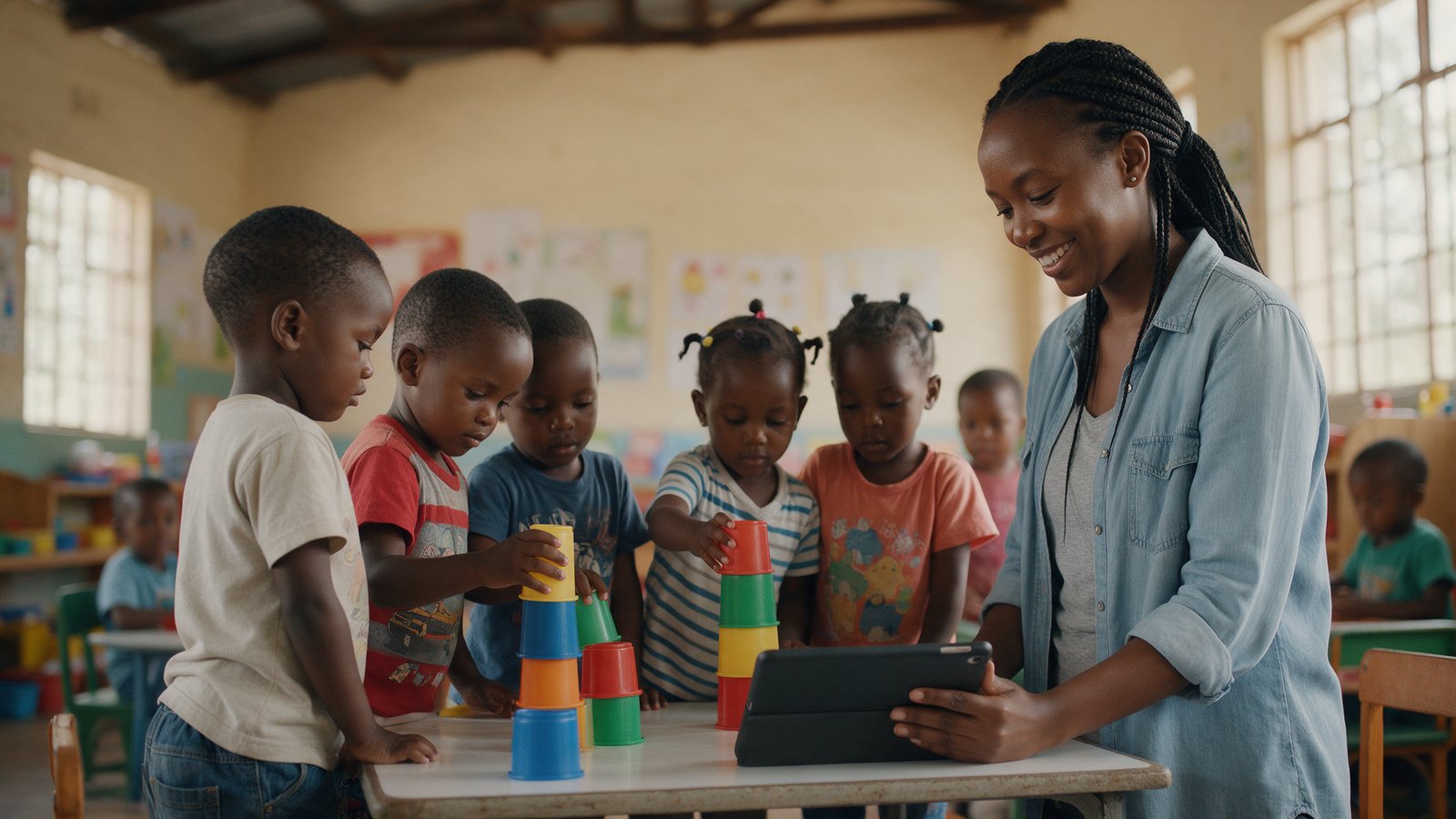
A fair comparison of five daycare, kindergarten and pre-primary management apps used in Kenya, covering daily records, parent communication, attendance and fees.
If you run a daycare, a kindergarten or a pre-primary section in Kenya, you already know how much of the day disappears into admin. Admission forms sit in files, attendance lives in an exercise book, fee balances are tracked across M-Pesa messages and receipt books, and parents ring the office or send WhatsApp messages asking how their child ate, slept and played. Settings range widely, from small neighbourhood daycares and home-based childcare to private kindergartens and the PP1 and PP2 classes of larger schools, and each needs a system that fits the way it actually works.
The regulatory picture is also changing. Nairobi City County has drafted regulations to put its Child Care Facilities Act (2017) into practice and has been mapping daycare centres across the city, and the Ministry of Education's new KEMIS learner data system covers learners from ECDE upwards. None of this means you need expensive software, but it does reward centres that keep tidy, up-to-date records. This guide is published by kidsday, so we include our own app, and we've tried to describe every option fairly.
In short
A fair comparison of five daycare, kindergarten and pre-primary management apps used in Kenya, covering daily records, parent communication, attendance and fees.
What to look for in a childcare app in Kenya
- Fit for early years: daily routines such as meals, naps and nappy or toilet care matter as much as assessments for children under six, so check the app is built for daycare and pre-primary, not only for exams.
- A parent app families will actually open: look for photos, daily updates and messaging on the phone parents already carry, rather than another channel to chase.
- Fees that match local practice: termly, monthly or daily charges, sibling arrangements and payments via M-Pesa or bank. Ask exactly how payments are recorded and reconciled.
- Clear records: admission details, health information and authorised pick-up persons should be easy to find when you need them, including for any county inspection or ministry data request.
- Data privacy: you are handling information about young children. Ask every vendor where data is hosted and how it is protected.
- Simplicity and support: caregivers are busy, so the app should be quick to learn, and you should know who to call when something goes wrong.
The best childcare management apps in Kenya
1. kidsday
kidsday is a childcare management platform built specifically for daycares, nurseries and kindergartens caring for children aged 0 to 6. Its focus is simplicity: educators can record the day in a few taps and parents see it straight away in the parent app. Alongside daily routines, attendance and billing, kidsday adds AI tools that help educators turn their everyday observations into development reports and lesson plans, which saves time at the end of a month or term. The platform is available in 22 languages, including English. The app itself and its help center are available in 22 languages, including English, so every educator and parent can get started quickly and find answers in their own language.
- Parent app with daily updates: photos, activities, meals, naps and notes, plus in-app messaging between parents and the centre.
- Check-in and check-out attendance, and records of meals, sleep, toilet routine, health observations and incidents.
- Invoicing and billing, including attendance-based charging and splitting fees between parents and funding agencies.
- AI Development Report and AI Lesson Planner, plus admissions management and child records with health information and authorised pick-up persons.
- Best for: daycares and kindergartens that want one simple app for daily care, parent communication, billing and AI-assisted reporting.
2. Mtoto Daycare App (Tiny Totos)
The Mtoto Daycare App comes from Tiny Totos, a Kenyan social enterprise that has worked since 2014 to help informal babysitters in East Africa grow into childcare entrepreneurs. The app, listed on Google Play, is designed to support daycare managers with the business side of running a centre: getting admission records off paper, taking attendance and keeping track of money coming in and going out.
- Digital child admission records and attendance.
- Fee logging, tracking of dues and payment reminders.
- Expense tracking (for example staff salaries and supplies) with a dashboard of income, expenses and profitability.
- Best for: small and community daycares, especially those growing from informal childcare, that want a straightforward tool focused on records, fees and running costs.
3. Elimika Sasa
Elimika Sasa is a school management system from Lembur East Africa in Nairobi, described as built since 2009 and ready for both CBC and 8-4-4. It lists PP1 to PP2 pre-primary assessment among its supported levels, so it can be a good fit for schools that run a pre-primary section alongside primary and junior school classes. Its site also shows a free Starter plan for small schools.
- CBC levels including PP1 to PP2 pre-primary assessment.
- M-Pesa fee collection through Paybill, Till and STK Push, with bulk SMS fee reminders.
- Parent portal, plus biometric attendance with SMS to parents on clock-in and clock-out.
- Best for: private schools with PP1 and PP2 classes that want one system for the whole school, with strong M-Pesa fee collection.
4. SmartSchool Kenya
SmartSchool is a Nairobi-based school management system and ERP that offers separate versions for secondary, primary and kindergarten or nursery schools in Kenya. Its site highlights e-learning tools, where teachers share videos, attachments and assignments, together with accounting, bulk SMS and fee collection via M-Pesa. A downloadable SmartSchool app lets parents take part, for example by submitting assignments photographed on a phone.
- A dedicated kindergarten and nursery school version, with a demo available.
- Fee collection via M-Pesa, accounting and bulk SMS.
- E-learning with videos, live streams, attachments and assignments.
- Best for: kindergartens and nursery schools that want a school-style system with fees, SMS and e-learning in one place.
5. VAS School
VAS School is a school management platform from Vector Automation Systems Ltd in Kenya. It names pre-primary and Montessori among the settings it supports, alongside CBC and 8-4-4 schools, and it offers separate portals for teachers, parents, finance and other roles. It runs as a mobile-ready web app that can be installed on phones and tablets, and its site mentions a KEMIS-ready export for ministry reporting.
- Support for pre-primary and Montessori settings as well as CBC and 8-4-4.
- Attendance, timetabling, fee structures and payment tracking.
- Role-based portals, including a phone-first parent portal, and KEMIS-ready export.
- Best for: schools with a pre-primary or Montessori section that want a broad school system with role-based portals and reporting.
Whichever app you choose, remember that public systems may sit alongside it. KEMIS, the Ministry of Education's learner data system that replaces NEMIS, covers learners from ECDE onwards, so it is worth asking any vendor how their records can support the data you are asked to submit.
How to choose
- Start with a trial: use the app with one class or room for two weeks before you commit, and run a real day through it, from drop-off to pick-up.
- Involve your caregivers and teachers: they will use the app most. If they find it slow or confusing, records will slip back to paper.
- Test the parent app yourself: install it on an ordinary phone, check how updates and messages look, and ask a few parents for feedback.
- Check fees and payments: walk through a full billing cycle, including part-time attendance, discounts and how M-Pesa or bank payments are recorded.
- Plan your data migration: ask how children's records, guardians and balances are imported, who does it, and how long it takes.
- Ask about data protection and support: where data is hosted, how it is protected, and how quickly the vendor responds.
kidsday
If your centre cares mainly for babies, toddlers and pre-primary children, kidsday is worth a try. It is built around the early years rather than exams, it keeps daily care simple for caregivers, and it gives parents a clear picture of their child's day. The AI Development Report and AI Lesson Planner take on some of the writing that usually eats into evenings, while attendance-based billing helps keep fees accurate.
Final thoughts
Kenya's early years sector is diverse, and there is no single right app for every daycare, kindergarten or pre-primary class. Community daycares may value a simple tool for records and fees, while larger private schools may want a whole-school system with M-Pesa built in. Make a shortlist, try two or three options with your own team and parents, and choose the one your caregivers will genuinely use every day. If you would like an app designed specifically for children aged 0 to 6, with simple daily updates and AI-assisted reporting, give kidsday a try.